Risk has always played a central role in human behavior, influencing everything from migration patterns to innovation. At its core, taking a risk is a decision to step into the unknown, a deliberate choice to accept uncertainty in exchange for the possibility of a greater reward. This primal urge, encoded deep within our cognitive framework, has been studied extensively by psychologists and neuroscientists alike. But nowhere is this impulse more vividly displayed than within the walls of a casino.
In a casino setting, the experience is not merely about betting money—it’s about engaging in a structured form of unpredictability. The flashing lights, rhythmic sounds, and the layout of the gaming floor all converge to create an environment that stimulates the brain’s reward system. The thrill doesn’t necessarily come from winning; rather, it’s the anticipation of what might happen next that drives people to play. Another factor is the illusion of control. Even when games are entirely based on chance, players often believe their choices influence the outcome. This psychological phenomenon helps explain why people remain at the tables long after the odds have turned against them.
Researchers have found that the dopamine system in the brain is particularly responsive not just to rewards, but to uncertain rewards. This means that not knowing whether you’ll win or lose actually increases dopamine release more than a guaranteed outcome. In other words, the unpredictability of an outcome makes the experience more engaging and memorable. Casinos understand this, and their design often exploits it. From the arrangement of slot machines to the absence of clocks or windows, every element is crafted to keep players immersed in a world where the next big win feels perpetually close.
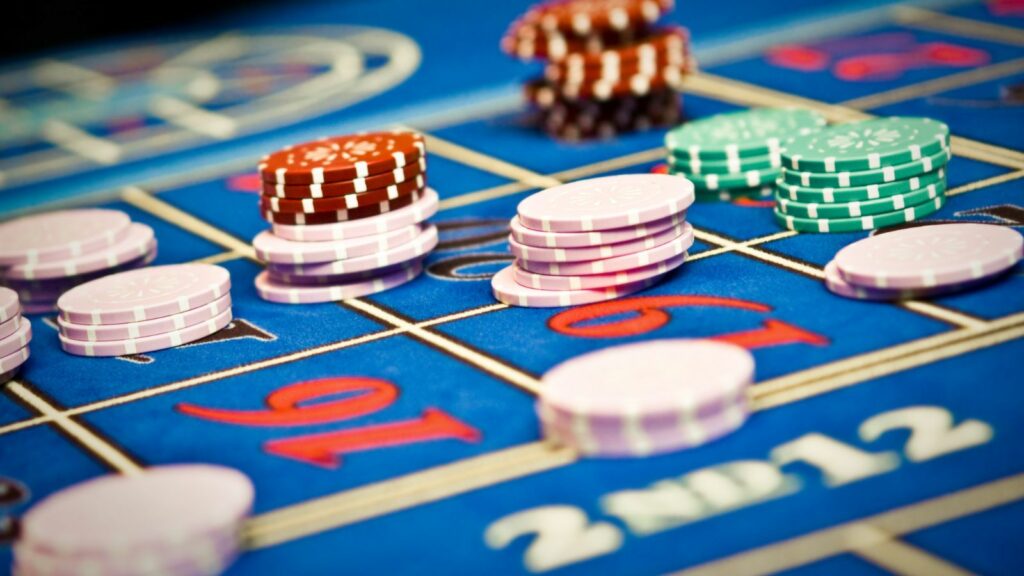
This risk-reward loop mirrors many other human behaviors, especially those involving exploration and creativity. Artists, entrepreneurs, and inventors also engage with uncertainty, often putting time, resources, and reputations on the line in pursuit of something new. What sets the casino apart is that it packages this same emotional dynamic into a condensed, immediate format. Instead of waiting months or years to see the outcome of a risky decision, players get results in seconds—success or failure, gain or loss, all in a single turn or spin.
Interestingly, individuals differ greatly in how they perceive and respond to risk. Some are naturally more risk-averse, avoiding situations where outcomes are uncertain, while others seek them out. Genetics, early childhood experiences, and cultural influences all play a role in shaping a person’s risk tolerance. For example, someone raised in a stable, resource-rich environment may feel more comfortable taking chances because failure carries fewer consequences. Conversely, those who grew up in more precarious conditions might take fewer risks or, paradoxically, embrace risk as a means of potential escape.
Understanding these psychological dimensions has important implications not just for gaming establishments but also for broader applications like finance, education, and even healthcare. When we understand why people make the choices they do in uncertain environments, we gain insight into behavior that extends far beyond the gaming floor.
Ultimately, the allure of risk taps into something fundamental about the human experience. Whether it’s the hope of a jackpot or the pursuit of a breakthrough idea, we are drawn to the unknown. Not because we are reckless, but because within uncertainty lies the potential for change—sometimes small, sometimes life-altering. The challenge, both in life and in the microcosm of the casino, is knowing when to take the leap—and when to walk away.